
Space 1999 is ripe for a reboot, and here I will be discussing which aspects of the original show should be kept and which should be discarded. I won’t be going in any particular order (of importance, for example), but I hope to cover all significant aspects of the show as I go.
Just a month ago or so, the number of surviving cast members of the show, already a lamentably small number, decreased by two, with the passing of Prentis Hancock and Clifton Jones within a few days of one another. Jones is the man who personified what, in my humble opinion, was a terribly underserved character, and one I feel should absolutely be included in the reboot.
I’m speaking, of course, of the great David Kano. After Koenig, Russell and Bergman, Kano is clearly the most important character to the show (no offense intended to Alan Carter!).
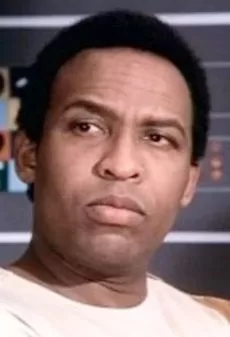
Kano’s on-screen career begins in Season 1, episode 2 (a very similar character, Ben Ouma, appeared in the pilot) and continued on through all of the remaining episodes of the first season (or series, as they call them in the UK). After the first season he, along with the likes of Bergman and Morrow, were victims of a purge of characters that new producer Fred Freiberger found not particularly likable, and was never heard from again. Rather, in season 2, it was new arrival Maya that seems to have replaced both Kano and Bergman, which is truly a shame since it was the interplay between those two characters that held so much storytelling promise.
Kano operates as the chief “Computer Operations Officer” on Alpha. More than this, he represents technology in the series, separate and subtly different from science, which is generally Bergman’s purview. While this may not seem like much of a distinction, in this show it positively is.
For illustration, let me contrast the Kano / Bergman relationship with the Spock / McCoy relationship from Star Trek. In the latter, Spock represents logic and McCoy represents emotion. I think that as that show developed, the writers thought that the two would be equally balanced, with Spock’s logic-based approach prevailing more or less half the time and McCoy’s humanist, emotional outlook being the right one the other half. In practice, it was never so balanced. Spock’s logic was shown to be the right course nearly every time, and McCoy, sadly, just watched from the sideline and carped about the application of logic to the situation (even when it seemed to be the obvious thing to do).
With Bergman and Kano, though, there was great promise for a much more balanced dichotomy. Both men embraced logic (which, in a science fiction/fantasy show, is probably the right side to be on), but for Kano logic was embodied by technology, namely the computer. He had full faith in the computer and would come to its defense when it was criticized (“Computer is not a crystal ball!”). Bergman, on the other hand, was far more willing to embrace the metaphysical or even the spiritual. Bergman had far less confidence in computer because he felt that the scope of what humans really knew or understood was much less than a person like Kano would like to admit.
This worked on Space: 1999 in a way that it would not work in Star Trek. Even though both shows were pretty firmly in the science fantasy genre, employing things like ESP, beings with god-like powers, telekinesis and other elements that have no real scientific basis (that we know of, at least!), Star Trek always tried to explain such things in scientific terms (the origin of “technobabble”) while Space was content to leave mysterious things mysterious. This put Bergman on even footing with Kano in a way that McCoy was never on Spock’s level of credibility.
Look no further than “Black Sun” to see how wonderful the dynamics between Bergman and Kano can be. In this episode, to save power, most systems on Alpha need to be shut down, and this eventually includes the computer as well. Kano is both indignant and horrified by the idea, as he can’t imagine anything more important to their survival than computer. Bergman, on the other hand, can only be described as bemused by Kano’s attitude toward something that is not going to be able to help them avoid being swallowed by a black hole.
The distinction between Kano, who embodies science through technology, and Bergman, who embodies science but not necessarily technology, provided a great opportunity for 1999 writers to comment on mankind’s relative ignorance. This is important for the series, not just because of the presence of the Mysterious Unknown Force (or “MUF”, to be discussed in a future post) but also the fact that in general, a whole lot of spooky, unexplained things happen out in space. While the show can be fairly criticized for failing to be faithful to some very basic scientific principles (shockwaves in space, for one, and let’s just not talk about the physics of the Breakaway event), I think we are behooved to allow ourselves to imagine that there’s probably more we don’t know than that we do know, and that would probably only accelerate as we traveled deeper into space and experienced more.
So, keep David Kano, the prickly computer operator whose lack of people skills so perfectly mimics many of the technology people we all know, and let him face off against Victor, who is going to always be coming at him with wild, extra-scientific theories (which, if the writers are doing their jobs, will be wrong as often as they’re right).